
Avita Health System
Mansfield, OH
Medication affordability remains a significant barrier to treatment adherence and continuity of care, particularly in rural populations. Patients who are uninsured, underinsured, awaiting insurance approval, affected by formulary changes, or experiencing medication shortages frequently encounter interruptions in therapy that can result in disease progression, emergency department utilization, and avoidable hospitalization. At the same time, large quantities of safe, unexpired medications are routinely destroyed despite retaining substantial therapeutic and financial value. Following expansion of Ohio drug repository legislation, our rural health system identified an opportunity to simultaneously address medication waste and medication access through a pharmacist-led regional Drug Repository Program.
The program was developed across two critical access hospitals and one acute care hospital serving a nine-county region of rural Ohio. Rather than operating independent repositories, a coordinated regional network was established utilizing our hospital-based ambulatory pharmacy clinics as the primary repositories; we also leveraged our outpatient pharmacies and select physician practices for additional donation drop-off locations. Pharmacists developed a comprehensive medication integrity framework incorporating donor attestation, chain-of-custody procedures, pharmacist inspection, inventory traceability, and diversion-prevention safeguards. Repository medications were integrated into pharmacist-led medication access services and transitions-of-care workflows, allowing pharmacists to provide bridge therapy, support hospital discharge planning, and prevent interruptions in care while coordinating long-term medication access solutions.
Since pilot implementation in fall 2024 and public expansion in July 2025, 235 unique donors have contributed medications to the repository. More than $860,000 in medication value and nearly 30,000 dosage units have been recovered. Through September 2026, over 220 patients received repository medications, with more than 3,700 dosage units redistributed, over 7,500 days of therapy supplied, and greater than $245,000 in medication value returned directly to patients. Inventory has ranged from every day oral generics to insulin products, GLP-1 receptor agonists, SGLT2 inhibitors, anticoagulants, inhalers, oncology and immunotherapies, and other specialty medications. Pharmacists routinely utilized repository inventory to prevent treatment interruptions associated with insurance loss, delayed Medicaid enrollment, patient assistance program delays, formulary exclusions, and medication shortages. Repository medications also became an important tool for supporting vulnerable hospitalized patients during discharge transitions when immediate access to therapy was otherwise unavailable.
This pharmacist-led Drug Repository Program demonstrates how rural health systems can transform medication waste into a sustainable medication access resource. Through integration with ambulatory pharmacy services, medication access programs, and transitions-of-care workflows, the repository evolved beyond traditional medication redistribution to become a clinical intervention supporting continuity of care, medication stewardship, health equity, and population health. The program provides a scalable model for health systems seeking to improve medication access while maximizing the value of medications that would otherwise be destroyed.
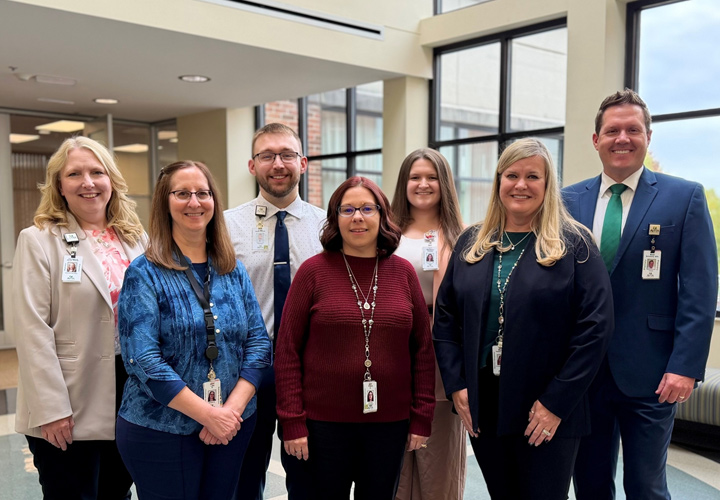
Front Row (L to R): Lisa Phillips, Tiffany Carroll, Mandy Teeters
Back Row (L to R): Christina Barnes, Luke Hoyda, Madison Pawlak, Brad Schwartz