
San Francisco VA Health Care System
San Francisco, CA
People who use drugs may experience overlapping risks related to overdose, HIV, viral hepatitis, sexually transmitted infections, wound complications, and other health needs, while stigma, transportation barriers, housing instability, and fragmented care can limit access to prevention and treatment. The San Francisco VA Health Care System developed a pharmacist-led, low-barrier model that integrates these services and makes care available when, where, and how Veterans are prepared to engage.
Established in 2020, the Harm Reduction and Syringe Services Program evolved from an early pharmacist-led fentanyl test strip pilot into a comprehensive syndemic care model. A clinical pharmacist practitioner provides medication therapy management and prevention visits that may include assessment of substance use and sexual health needs; medication review and education; HIV, sexually transmitted infection, and viral hepatitis laboratory testing; vaccination assessment; prescribing within scope, including HIV pre-exposure prophylaxis, doxycycline postexposure prophylaxis, medications for substance use disorders, and harm reduction supplies; and linkage to specialty care and social supports. Care is delivered through a multi-modal access model combining clinic, telephone, and video visits, population health outreach, permanent supportive housing outreach, group education, mail delivery, community events, and a 15-site harm reduction vending machine network. The program also established fixed and mobile overdose prevention infrastructure, including a process for staff to carry naloxone as part of their work duties, naloxone rescue cabinets in supportive housing, clinic settings, and medical center parking garages, naloxone-equipped transportation vehicles, and high-capacity sharps disposal bins at community-based outpatient clinics. Products, distribution pathways, and outreach strategies are continually adapted based on Veteran and staff feedback, utilization data, and changes in the unregulated drug supply.
From January 2020 through July 24, 2026, 1,776 unique Veterans engaged in 3,458 documented clinical touchpoints; 948 Veterans obtained vending machine access. From August 2023 through July 2026, the vending machines dispensed 39,998 products. Across all distribution modalities, the program distributed 70,740 sterile syringes, 11,831 drug-checking test strips, 32,326 condoms, and 2,152 naloxone kits. Following vending machine implementation, distribution increased by 847% for syringes, 1,595% for condoms, 797% for sharps containers, and 261% for fentanyl test strips. Qualitative evaluation in permanent supportive housing settings found that Veterans and staff valued free, continuous access, reduced transportation and financial barriers, improved comfort and peace of mind, and opportunities to support peers and family members; participants did not perceive increases in litter, vandalism, or crime. The vending machine platform was subsequently expanded to include HIV and syphilis self-tests, with early participants describing testing as straightforward and low stigma while emphasizing the importance of privacy-sensitive placement and clear linkage to care.
This pharmacist-led model demonstrates how integrated clinical care, population health, outreach, automated access, and distributed prevention infrastructure can extend pharmacy practice beyond traditional clinic walls and reduce barriers to harm reduction and syndemic prevention services.
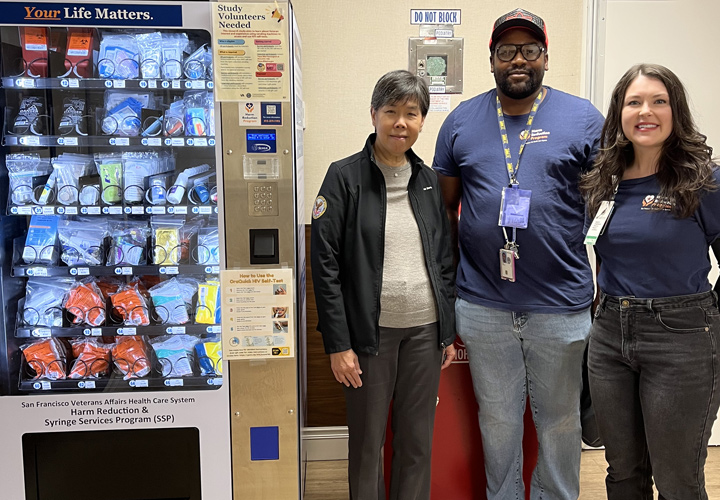
Left to Right: Donna Dare, Aaron Isom, Tessa Rife-Pennington