
National Drug Shortages:
January 2001 to June 2026
SUMMARY
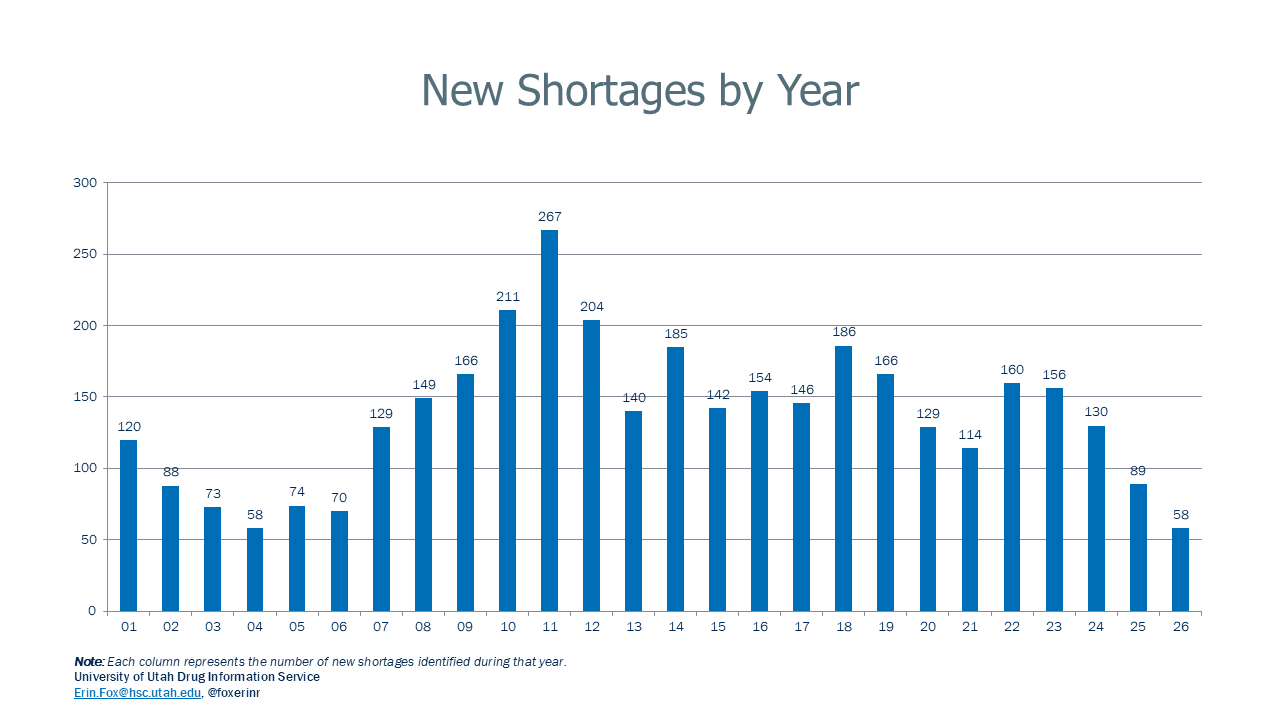
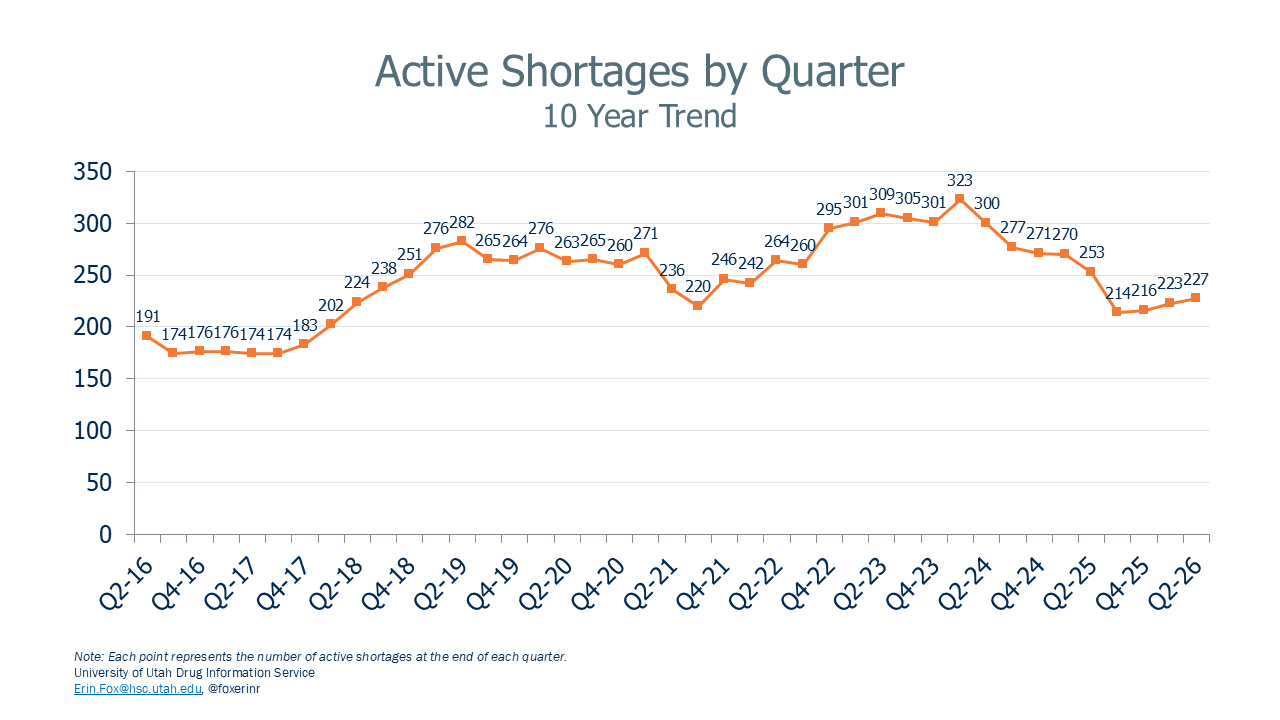
- The number of active drug shortages is 227, trending up for the second quarter in a row, but significantly lower than the all-time high of 323 in the first quarter of 2024.
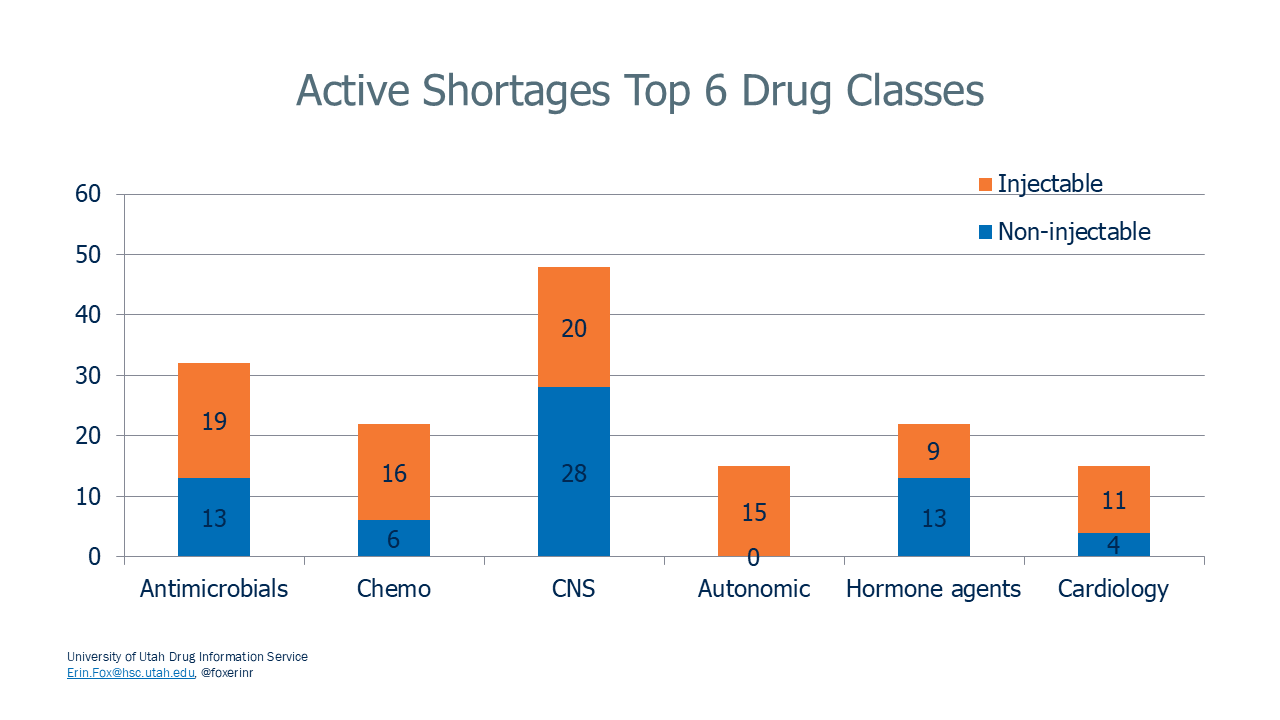
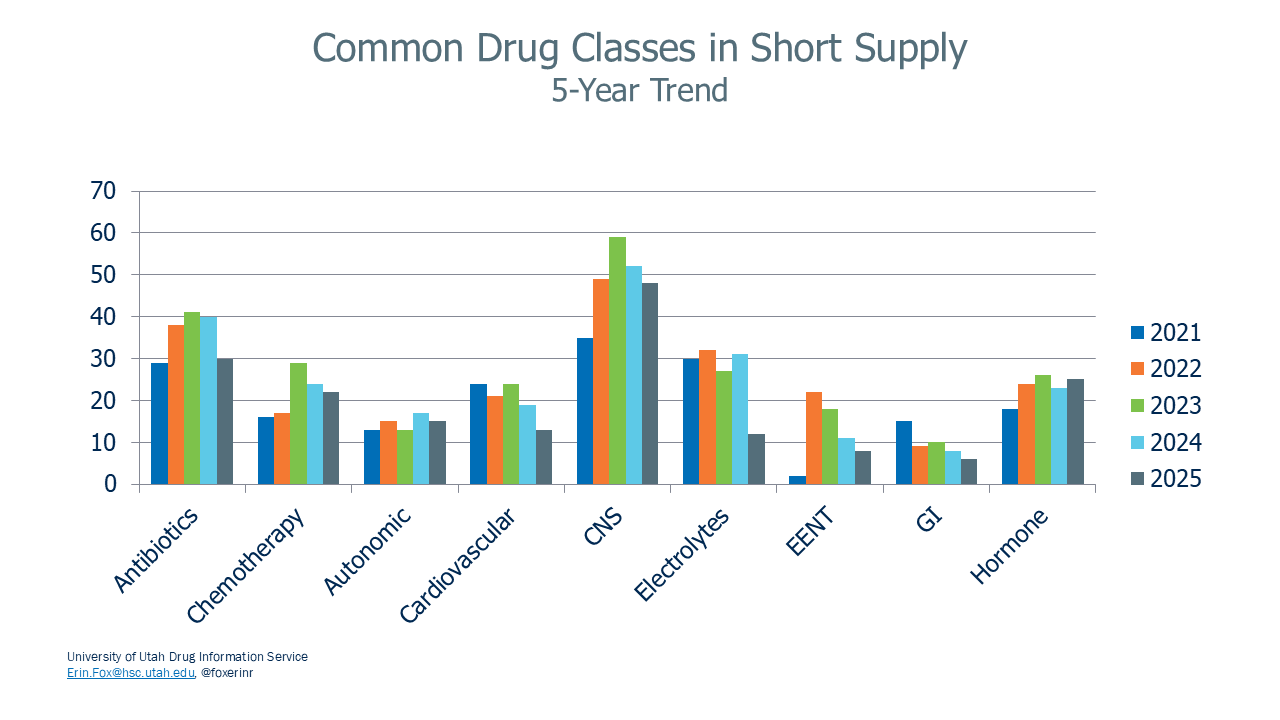
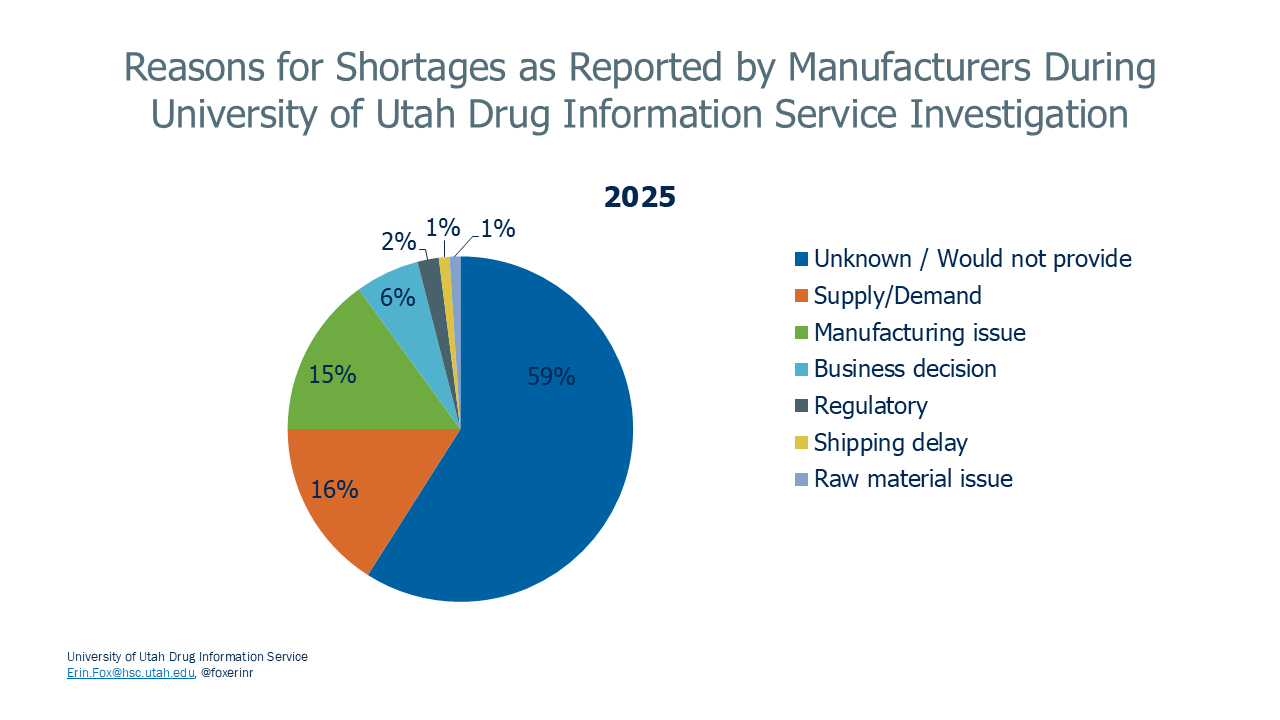
- Chemotherapy shortages remain problematic. Ifosfamide is a particularly severe new shortage this quarter. The shortage is due to manufacturing quality problems at a key supplier. Ifosfamide is used in a number of curative regimens such as those for testicular cancer and sarcoma.
- Sixteen percent of active drug shortages are controlled substances. Patients with chronic pain or ADHD may struggle to fill monthly prescriptions. Health systems may struggle to obtain sufficient supplies needed for surgeries and procedures.
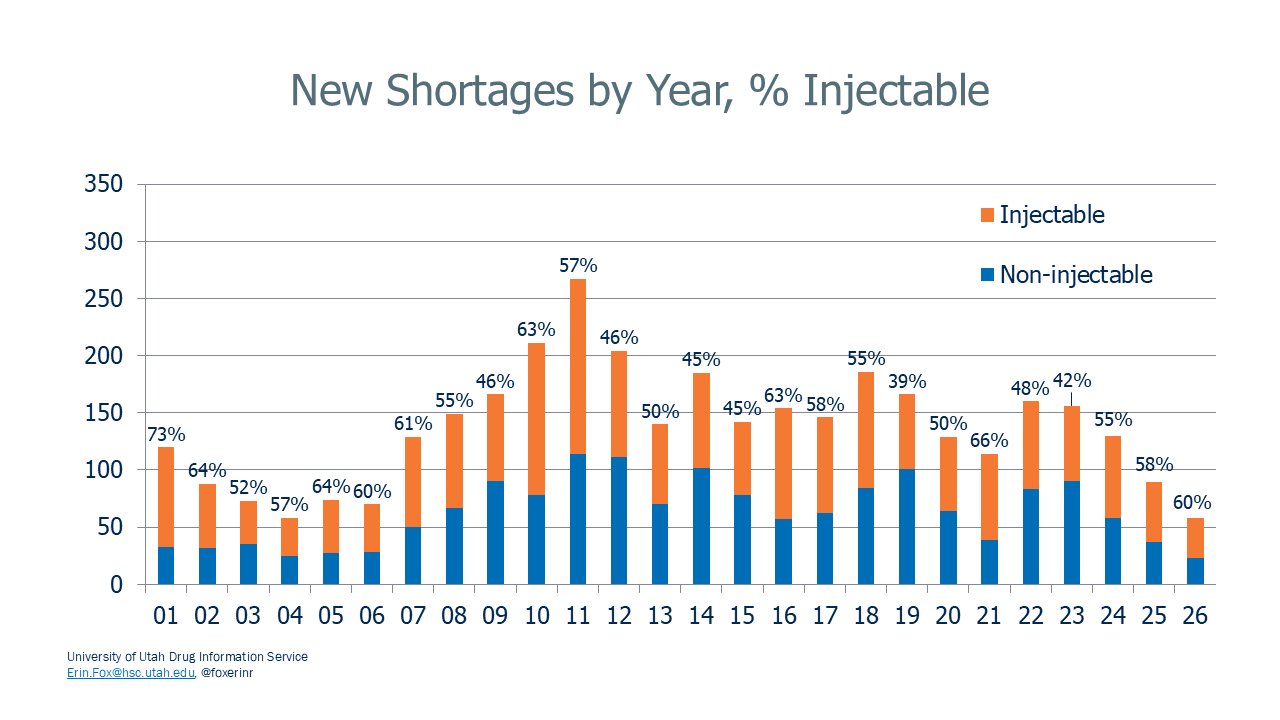
- Just under half (48%) of all new shortages in 2026 are sole-source products (a single manufacturer).
- Ten percent of all new shortages in 2026 are contrast agents used for potentially life-saving procedures such as CT scans and MRIs.
- The impact of the conflict in Iran on the U.S. drug supply remains unclear.
- Lower numbers of shortages do not necessarily translate into fewer patients impacted, as a single shortage can impact large numbers of patients.
- The workload required to manage shortages, including work to change pharmacy automation and electronic health records, adds to the challenges of pharmacy staff shortages.
Selected Links of Interest
- National Academies of Science, Engineering, and Medicine: Improving Resiliency in the US Pharmaceutical Supply Chain Through Make-Buy-Invest Strategic Actions: A Workshop
- Brookings: Drug shortage vulnerability for Schedule II medicines
- Brookings: China’s role in US Drug Supply Chains
- Government Accountability Office: Report on Drug Shortages (April 2025)
- Brookings: Federal Policies to Address Persistent Generic Drug Shortages
- ASHP Policy Solutions to Address the Drug Shortage Crisis
- Senate Special Committee on Aging
- ASHP: Improving the Quality and Resilience of the United States Healthcare Supply Chain
For More Information
All data provided by the University of Utah Drug Information Service. ASHP and the University of Utah maintain a drug shortage database that tracks drug availability across the nation.
For more information, visit ashp.org/drug-shortages or contact:
 Erin R. Fox, PharmD, MHA, BCPS
Associate Chief Pharmacy Officer - Shared Services
University of Utah Drug Information Service
linkedin.com/in/erin-r-fox-utah
@foxerinr.bsky.social
 Michael Ganio, PharmD, BCPS, FASHP
Senior Director, Pharmacy Practice and Quality
ASHP
linkedin.com/in/michaelganio
Please contact Dr. Fox for permission to reprint data.

